
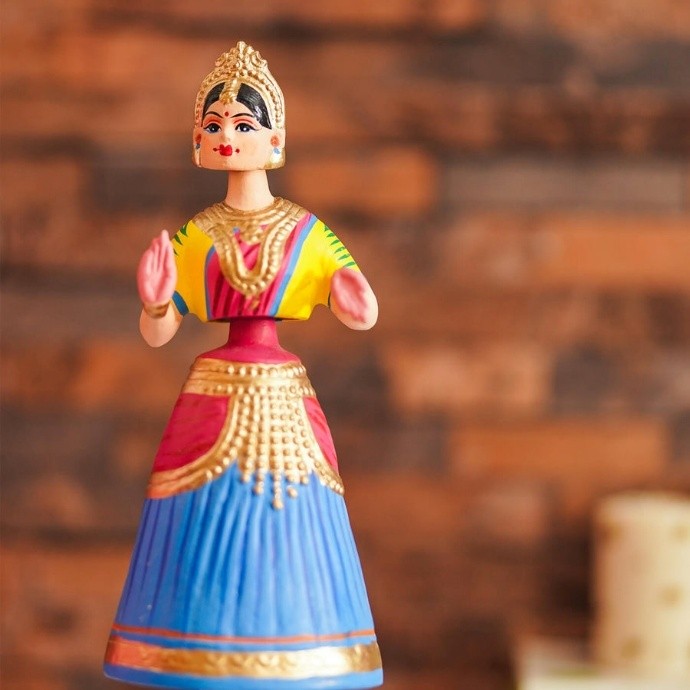
The Origins of Thanjavur Doll
The Thanjavur Doll, affectionately called “Thalaiyatti Bommai” meaning “head-nodding doll”; is one of Tamil Nadu’s most delightful traditional handicrafts. While exact historical records are sparse, the tradition likely evolved over several centuries as part of South India’s rich sculptural and festive practices.
In traditional households, dolls and figurines played an important role in Navratri Golu; a ritual display of dolls across successive steps during the nine nights of Navaratri. Worshipping the feminine divine, families would arrange a tiered display (Bommai Kolu) of dolls representing gods, goddesses, mythological scenes, courtly life, animals, and everyday rural characters. Amid this tableau, the nodding Thanjavur Doll became a beloved favourite, symbolising joy, hospitality, and celebration.
The Art of Doll Making
Artisans traditionally use materials such as Terracotta or clay, Papier-mâché (paper pulp bonded with adhesive) and Plaster of Paris. The body and hollow head are crafted separately. Classic dolls are constructed with a weighted base (often filled with clay pellets, metal bits, or stones) so the head can wobble or nod. This counterbalance is critical for the whimsical nod. Once the body and head are shaped and dried, they are joined together.
The doll’s eyes, facial expressions, costumes, jewellery, and features are all hand-painted, drawing inspiration from local attire, folklore, classical dance forms, and temple iconography. This results in each doll being a unique piece, not just a replicated figure. Local pigments and traditional paints were once used, though contemporary artisans may combine these with modern, non-toxic paints to meet market preferences.
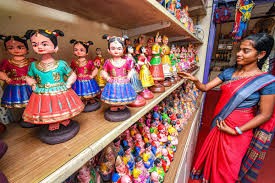
Cultural Significance and Ritual Life
Symbol of Auspiciousness
The gentle bob of the head is seen as a symbolic welcome, reflecting warmth, auspiciousness, and an atmosphere of celebration
While some crafts have been industrialised for mass markets, many Thanjavur dolls continue to be handcrafted, preserving the subtle imperfections that give each piece life.
Recognition, Exhibitions, and Wider Appreciation
Thanjavur Doll making received a GI tag as of 2008-09. They are regularly featured in Surajkund Craft Mela (Haryana), India, International Trade Fair (New Delhi), State handicraft festivals etc.