
The Origins of Kota Pottery
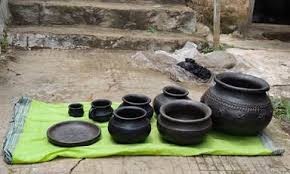 Kota pottery is an indigenous earthenware tradition practiced by the Kota tribal community of the Nilgiris in Tamil Nadu. Unlike many mainstream ceramic crafts, Kota pottery is deeply rooted in tribal cultural life, shaped by the rhythms of the hills, seasonal cycles, and the community’s spiritual beliefs.
Alongside weaving, basketry, and ritual arts, pottery occupies a central place in their material culture. While written records on the exact historical origins are, archaeological and anthropological studies reveal that earthenware production in the Nilgiris dates back centuries, adapting over time to meet the needs of tribal life.
For the Kotas, vessels serve both domestic and sacred purposes; from cooking, storing grain and water, to use in rituals and ceremonial offerings.
The Making Process
Clay Sourcing and Preparation
The process begins with local clay gathered from riverbanks and hillside deposits. The Kotas possess intimate knowledge of the land, identifying clay pockets that yield the right balance of plasticity and strength suitable for wheel and hand-building techniques. The clay is cleaned and kneaded to remove impurities, ensuring a uniform texture.
Shaping and For Decoration
Small batches of clay are shaped by hand or on primitive wheels. The forms are often functional and utilitarian; water pots, cooking pots, pitchers, lamps (kuthu vilakku), and ritual vessels. Decoration is usually minimal; occasional linear incisions or simple grooves may be added for grip, but surface embellishment remains unobtrusive.
Firing in Open Kilns
Once shaped and dried, the pottery is fired in open kilns constructed from bricks or stone, with firewood as fuel. This firing method produces a rustic finish characterised by natural colour variations.
Intersections with Broader Visibility and Recognition
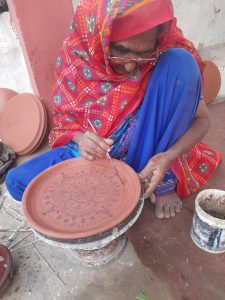 Pieces of Kota pottery have been featured in tribal art and ethnographic museums. Anthropological conferences and craft studies symposia have included discussions on tribal pottery traditions, highlighting the importance of indigenous firing techniques, community knowledge transmission, and sustainable craft practices.
Government and non-government institutions have recorded Kota pottery as part of the intangible cultural heritage of the Nilgiris, supporting efforts to preserve skills and transmit them to younger generations.
Image References
https://niceorg.in/blog/culture/handcrafted-terracotta-pottery/