
Origins of Manamadurai Pottery
Rooted in the clay-rich soils of Manamadurai, a town in the Sivaganga district, this craft embodies centuries of functional artistry where humble clay is transformed into an art. The pottery tradition in Manamadurai predates written histories, emerging organically from the region’s abundant clay deposits and the domestic needs of agrarian communities.
The Crafting Technique: From Clay to Kiln
Clay Preparation
The process begins with collecting local clay, which is then soaked and kneaded to remove impurities and achieve a workable consistency.
Shaping on the Potter’s Wheel
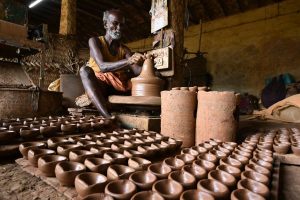
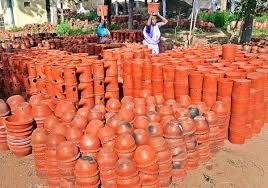 Artisans sit at the traditional foot-operated potter’s wheel, a technology passed down through generations. With practiced fingers and steady palms, the potter centers the clay and shapes it into Storage jars (urulis and kudams), Water pots (madis), Cooking vessels etc.
Drying and Firing
Once shaped, pots are left to air-dry naturally, protecting them from cracks caused by rapid moisture loss. After thorough drying, the vessels are stacked in traditional wood-fired kilns.
Cultural Relevance and Contemporary Adaptations
 During festivals such as Pongal and Karthigai Deepam, clay pots take on symbolic roles; whether in cooking ritual dishes or as lamp holders in sacred spaces. Their presence in homes and temples makes pottery both functional and symbolic.
Pottery is often showcased alongside Indian terracotta traditions at ethnographic exhibitions, bringing global attention to the craft’s ecological value and cultural depth. Artisan groups and cooperatives work with design educators to blend traditional techniques with contemporary aesthetics, aiming to sustain interest among younger makers and buyers.
Image References
https://www.thehindu.com/news/cities/Madurai/less-hands-to-turn-the-potters-wheel/article5517964.ece