
Historical Roots
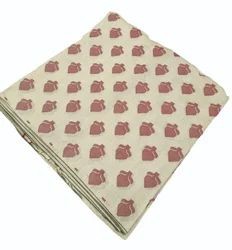 Khadi in Coimbatore is more than cloth; it’s a lived tradition that links India’s independence movement to today’s conversations on sustainable fashion.
Khadi’s story is inseparable from the freedom struggle. Promoted by Mahatma Gandhi as a symbol of self-reliance and swadeshi, khadi moved beyond mere fabric to become a statement of political identity and economic decentralisation. In Tamil Nadu, and particularly in the Coimbatore region, small weaving settlements adopted khadi as a household industry; a way to earn livelihoods while resisting industrial dependency.
The Production Process
- Raw fibre selection:
Good khadi begins with quality cotton. Many clusters source locally grown cotton; some blend cotton with hand-spun silk or tussar for hybrid khadi varieties. - Hand-spinning:
Spinners draft the fibre and twist it on the charkha to produce single or ply yarns. The speed, tension and twist are controlled by the spinner’s hand, which defines the yarn’s character; coarse and lofty for rustic khadi, finer and compact for dressier variants. - Yarn preparation:
Yarns may be carded, doubled, and wound into bobbins or cones. In some cases, artisans bleach or scour the yarn prior to dyeing. - Dyeing (optional):
Colouring can use natural dyes (indigo, madder, turmeric) or modern colour-fast dyes, depending on market requirements. It is often done in small batches to preserve hand-loomed texture. - Weaving on handloom:
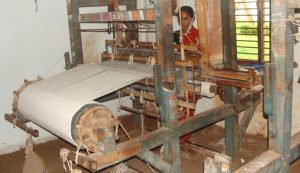
Weavers set up warps on pit or frame looms and weave the khadi fabric. The handloom’s rhythm, the shuttle’s beat and the weaver’s eye for tension produce a fabric that is intentionally uneven; the hallmark of authentic khadi. - Finishing:
After weaving, the fabric is washed, sun-dried and sometimes calendered lightly to enhance hand feel. Minor defects are mended by hand so the final cloth is clean and wearable. Every stage is labour-intensive and human-scale; while production volumes are modest, the social and environmental cost is low compared to industrial processes.
Recognition, Revival and Global Reach
 National institutions such as the Khadi & Village Industries Commission (KVIC) and state khadi boards have historically supported khadi. Khadi’s low carbon footprint, biodegradable nature and human-scale production resonate with international audiences seeking alternatives to fast fashion. Export volumes are modest compared to industrial textiles, but khadi pieces increasingly appear in curated export consignments, ethical clothing stores and designer showcases overseas.
Image References