
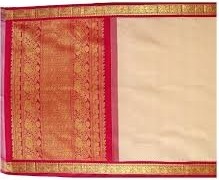
Molakalmuru sarees are among Karnataka’s most distinguished silk traditions, celebrated for their lustrous texture, vivid colour combinations, and richly symbolic motifs. Woven in and around Molakalmuru town in Chitradurga district, these sarees carry forward a legacy of refined craftsmanship shaped by temple culture and royal patronage. They have GI status in 2008.
The Origins of Molakalmuru Sarees
Historical accounts and oral traditions suggest that weaving in this region flourished under local rulers who encouraged artisans to produce textiles suited for ceremonial and courtly use. The proximity of temple towns and cultural centres meant that weavers drew inspiration from sacred architecture, ritual textiles, and classical ornamentation.
Over time, Molakalmuru developed into a recognised silk weaving hub, with weaving skills passing from one generation to the next within tightly knit artisan communities. Unlike mass textile centres, Molakalmuru retained a household-based handloom culture, where weaving remained a family craft sustained through inherited knowledge and practice.
The Origins of Molakalmuru Sarees
Historical accounts and oral traditions suggest that weaving in this region flourished under local rulers who encouraged artisans to produce textiles suited for ceremonial and courtly use. The proximity of temple towns and cultural centres meant that weavers drew inspiration from sacred architecture, ritual textiles, and classical ornamentation.
Over time, Molakalmuru developed into a recognised silk weaving hub, with weaving skills passing from one generation to the next within tightly knit artisan communities. Unlike mass textile centres, Molakalmuru retained a household-based handloom culture, where weaving remained a family craft sustained through inherited knowledge and practice.
The Art of Weaving
Molakalmuru sarees are woven from high-quality mulberry silk, known for its smoothness and strength. The weaving is done on traditional handlooms. These sarees are characterised by a silk-rich body, contrasting borders that frame the saree boldly and a heavily decorated pallu that serves as the visual highlight. Common motifs include parrots, peacocks Mango (paisley) patterns representing fertility and prosperity, floral vines, mythological and traditional ornamental forms. These are woven directly into the fabric using coloured silk threads and zari (metallic thread), giving the sarees their regal appearance. Depending on complexity, a single saree can take several weeks to complete.
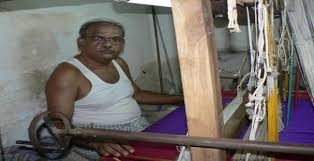
Molakalmuru sarees are traditionally worn during weddings, temple festivals, and major life celebrations. In many families, these sarees are preserved as heirlooms, passed from one generation to the next as symbols of continuity, prosperity, and cultural pride.