
Athangudi tiles are among Tamil Nadu’s most visually striking and culturally rooted craft traditions; handcrafted cement tiles known for their bold colours, intricate geometric patterns, and mirror-like finish. Produced in the small village of Athangudi in Sivaganga district, these tiles are inseparable from the architectural identity of Chettinad’s grand heritage mansions. Each tile is handmade, and no two pieces are ever perfectly identical, giving floors a living, artistic character.
Origins of Athangudi Tile Craft
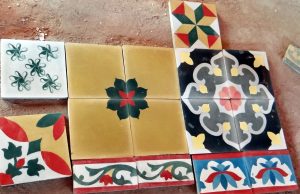 The story of Athangudi tiles is closely tied to the Chettinad architectural boom of the late 19th and early 20th centuries. The prosperous Chettiar merchant community, known for building lavish homes blending Indian and European influences, sought decorative flooring that was both elegant and suited to the tropical climate.
Inspired by imported European encaustic tiles yet adapted to local materials and climate conditions, artisans in Athangudi village developed a unique tile-making tradition using locally available sand, cement, and natural oxides. Over time, this evolved into a specialised craft passed down within artisan families.
The Tile-Making Process
Design Preparation
The process begins with a metal mould that holds the tile’s pattern. Within this mould, artisans place a thin stencil that divides the surface into sections for different colours.
Colour Mixing
Coloured cement pastes are prepared by mixing cement with mineral oxide pigments. These pastes are poured by hand into the patterned mould, filling each section with precision.
Layering
Once the design layer is complete, a layer of fine sand and cement is added behind it to create thickness and strength. The tile is then carefully levelled and compressed.
Sun Drying and Water Curing
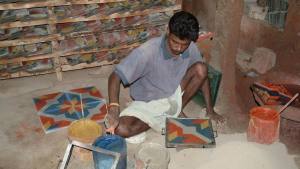 Instead of being fired in kilns, the tiles are sun-dried and later immersed in water tanks for curing. This slow process allows the cement to gain strength naturally. After curing, the tiles are polished by hand to achieve their characteristic glossy finish. Because the colours are part of the tile body rather than printed on top, Athangudi tiles maintain their vibrancy for decades.
Design Language and Aesthetic Appeal
Athangudi tiles are known for their symmetry, repeating motifs, and bold contrasts. Popular designs include Floral medallions, Geometric tessellations, European-style patterns adapted to Indian tastes etc.
Climatic Significance and Modern Adaptation
Beyond aesthetics, the cement composition keeps floors cool, making them ideal for Chettinad’s hot weather. Their durability allows them to last generations, often outliving the buildings they adorn.
Today, small workshops in Athangudi continue to produce tiles using traditional techniques. Artisans are adapting to modern demands by creating custom sizes, new colour palettes, and contemporary patterns while preserving the original handcrafting process. Training initiatives and heritage tourism in Chettinad have also helped sustain the craft, as visitors witness tile-making demonstrations and purchase tiles for restoration and design projects.
Image References
https://www.thehindu.com/children/athangudi-tiles-legacy-history-craftsmanship/article69791289.ece