
The Origins of Guledgudd Khana
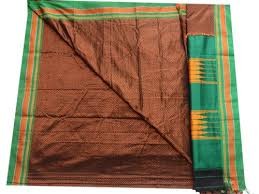 Guledgudd Khana sarees are a distinctive handloom textile tradition from Guledgudd town in Bagalkot district, Karnataka, known for their firm weave, fine cotton texture, and intricate small motifs. Originally produced as blouse fabric, Khana weaving has evolved into sarees, dress materials, and contemporary garments, owning to its durability and aesthetic appeal.
Weaving families in Guledgudd passed down the craft through generations, working on pit looms set up within homes. The textile became an everyday essential, valued for its resilience in hot climates and its ability to withstand frequent washing.
The Art of Weaving Khana Fabric
Motifs and Patterns
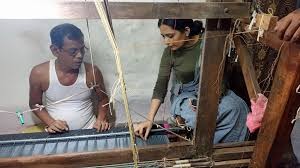 One of the defining features of Khana textiles is the presence of small, repetitive motifs woven directly into the fabric. These include tiny geometric shapes, stylised floral forms, as well as diamond and dot patterns. These motifs are not printed but created through extra-weft techniques during weaving. The borders often feature subtle stripes or contrasting bands that frame the main body. Traditional colour palettes include earthy reds, deep blues, greens, and mustard tones, often combined with contrasting borders. While older versions relied on natural dyes, contemporary production may use colourfast chemical dyes for longevity.
Recognition and Revival
Guledgudd Khana weaving has received GI status in 2011, formally recognising the uniqueness of the craft and its regional origin in Karnataka.
Textile designers and sustainable fashion advocates appreciate Khana for its durability, handwoven authenticity, and minimal environmental impact, placing it within broader discussions on slow fashion and heritage textiles.Designers experimenting with regional Indian weaves have incorporated Khana into modern silhouettes, helping the craft reach new audiences beyond its traditional base.
Image References
https://shop.silkal.in/the-top-5-oldest-famous-traditional-sarees-of-karnataka/
https://kubsa.in/blogs/journey-of-khana-from-a-30-inches-blouse-fabric-to-a-saree/test-2