
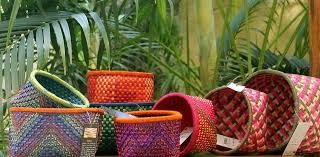
Chettinad Kottan baskets are among Tamil Nadu’s most distinctive eco-friendly crafts, celebrated for their strength, lightness, and vibrant woven patterns. Made from palm leaves by artisan communities in the Chettinad region, these baskets are rooted in a landscape of dry climates and resourceful living.
The Origins of the Craft
The Kottan basket tradition flourished in the Chettinad region of Sivaganga district, an area known for its grand architecture, rich mercantile history, and strong craft culture. With abundant palm trees growing in and around villages, local communities developed techniques to transform palm leaves into durable household items to store grains, transport produce, and organise domestic spaces. Their breathable structure makes them ideal for storing dry food items, while their aesthetic appeal has brought them into modern interiors as sustainable décor pieces.
They were often included in a bride’s trousseau, representing preparedness and prosperity in her new home.
The Crafting Process
Harvesting and Preparation
Mature palm leaves are harvested, cleaned, and dried under the sun. Drying strengthens the fibres while preserving flexibility. The leaves are then split into long, thin strips of uniform width.
Dyeing and Colour Work
Traditionally, natural dyes derived from plants and minerals were used to colour the strips in warm reds, yellows, greens, and blacks. Today, artisans also use safe synthetic dyes to achieve brighter, longer-lasting shades while preserving the traditional aesthetic. The dyed strips are dried again before weaving.
Weaving Technique
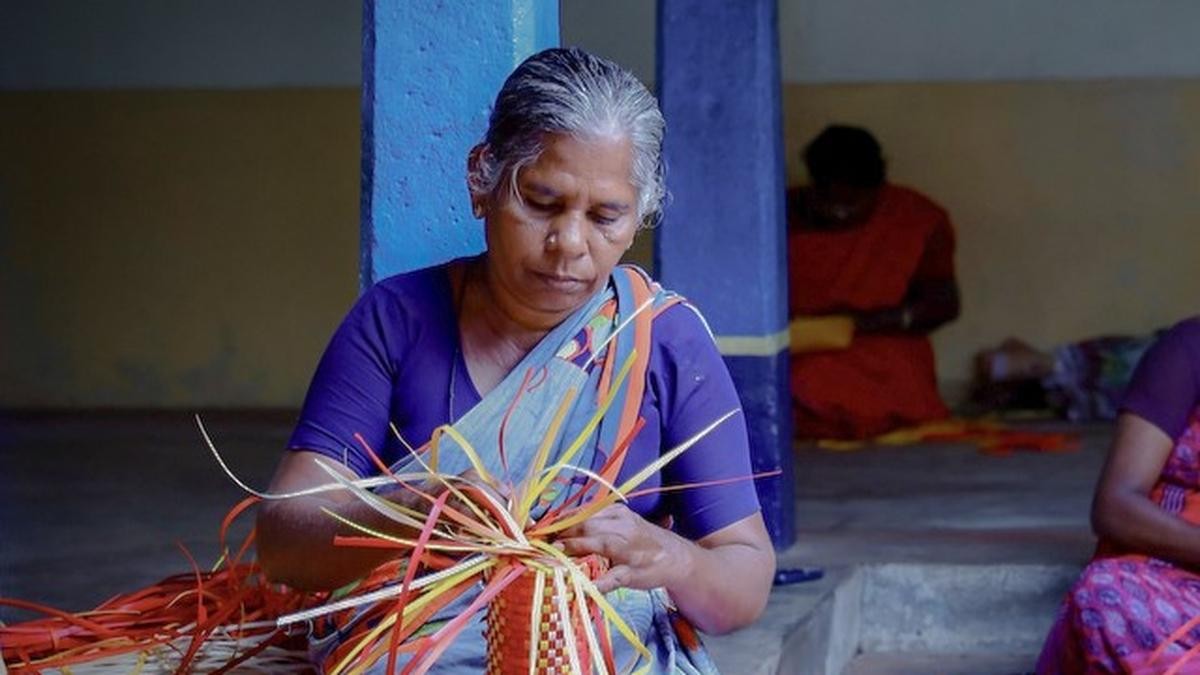
The weaving process involves interlacing strips in tight, repetitive patterns to form sturdy structures. Artisans begin with the base, gradually building upward into the sides and rim. The patterns often include checks, stripes, and geometric motifs, created by alternating coloured strips. Handles and lids may be added depending on the basket’s purpose. Despite their light weight, these baskets are remarkably strong due to the tight weave and natural resilience of palm fibres.
Recognition
Chettinad Kottan baskets have received GI status in 2012-13, formally recognising their unique regional identity and traditional weaving technique. With growing global awareness of sustainable living, these baskets are increasingly valued not just as traditional artifacts but as contemporary eco-design products like organisers and gift hampers as well as customised packaging for eco-conscious brands.
Image References
https://cultureandheritage.org/2022/06/colourful-kottan-baskets-from.html