
Historical Background
Thanjavur Art Plates are among South India’s most refined metal crafts, admired for their ornate relief work, multi-metal composition, and devotional themes. Temple architecture, bronze iconography, and mural traditions all contributed motifs and visual language to the craft. Over time, Thanjavur art plates evolved into a specialised hereditary occupation.
The Making of a Thanjavur Art Plate
Multi-Metal Composition
A typical Thanjavur art plate is crafted using a combination of Brass (for the base plate), Copper (for decorative layers) and Silver (for highlights and fine detailing). This layering of metals creates visual contrast and depth, which is a hallmark of the craft.
Design and Relief Work
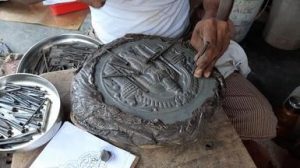
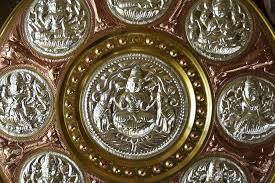 Artisans begin by sketching the design onto metal sheets. Motifs are often derived from Hindu deities such as Lakshmi, Ganesha, or Saraswati; Temple chariots and arches; Peacocks, lotuses, and floral scrollwork etc. Using chisels and hammers, craftsmen shape the metal from the reverse side in a process known as repoussé, raising the forms into relief. Fine engraving is then added from the front to enhance details like facial features, jewellery, and ornamental patterns.
Assembly and Finishing
The raised motifs are carefully cut out and affixed to the base plate. Additional silver or copper detailing may be added through inlay or overlay techniques. Finally, the plate is polished to enhance the contrast between the metals, giving it a luminous, layered appearance. Each piece can take several days to complete, depending on complexity, and no two plates are ever exactly alike.
Cultural Significance and Preservation
 Traditionally, Thanjavur art plates were used in temple rituals and royal ceremonies, often placed in sanctums or offered as devotional objects. Today, these plates are displayed in homes as symbols of prosperity, devotion, and cultural refinement. They are popular as prestigious gifts for weddings, housewarmings, and official honours.
Modern artisans continue to experiment with new plate sizes, contemporary frames, and customised motifs while preserving traditional repoussé methods. Some plates are now designed for wall mounting or corporate gifting, helping the craft adapt to contemporary tastes. Despite these innovations, the essence of Thanjavur art plates remains unchanged.
Image References