
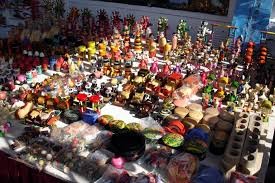
 The Origins of Channapatna Toys
Originating in the town of Channapatna in Karnataka’s Ramanagara district, this craft has become a symbol of eco-friendly play, artisanal creativity, and cultural heritage that combines vibrant colours, tactile appeal and child-safe materials.
The tradition of wooden toy making in Channapatna dates back to at least the late 18th century, marking over 200 years of continuous craft evolution. Local histories and craft scholars trace the origins of the craft to the period when Tipu Sultan of Mysore encouraged the development of lacquered wood products by bringing in skilled artisans, reportedly from Persian regions to train local woodworkers in the art of lac-turnery and lacquer finishing.
This fusion of influences helped establish Channapatna as a centre of lacquered wood production, later earning it the endearing title of “Gombegala Ooru” (the Toy Town) of Karnataka.
The Art of Toy Making
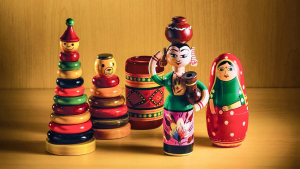 Channapatna toys are traditionally made from soft ivory wood (locally called alae mara), prized for its light weight and smooth grain. Natural, non-toxic vegetable dyes and lac lacquer are applied to the spinning wood using friction, which melts the lac into a smooth, vibrant finish. Dried palm leaves are often used to polish the lacquered surface, enhancing the gloss and richness of colour.
Over the years, the legacy of Channapatna craft has expanded far beyond traditional spinning tops and dolls to include Pull toys and animal figurines, Stackers and puzzles, Educational toy sets and Home decor items such as coasters, spice boxes, photo frames, trays, and candle stands.
Recognition and Global Awareness
Channapatna toys received GI status in 2005/2006, which formally recognises their unique craft identity tied to the Channapatna region and protects authentic production methods under the World Trade Organization framework.
Contemporary designers and students have created products like watches inspired by Channapatna lacquer techniques; including globally patented designs that integrate traditional woodworking aesthetics into modern consumer products.
Efforts by craft cooperatives, government programs like the Karnataka Handicrafts Development Corporation etc. aim to strengthen marketing, provide training, and expand market access to sustain the craft’s future.