
The Origins
Navalgund Durries are among Karnataka’s most distinctive handwoven textiles, known for their striking geometric layouts and symbolic motifs.
The weaving tradition of Navalgund traces back several centuries, when skilled weavers migrated from Bijapur and settled in the Dharwad region. Over time, weaving became a home-based occupation, primarily for women artisans who balanced domestic responsibilities with loom work.
The Art of Weaving
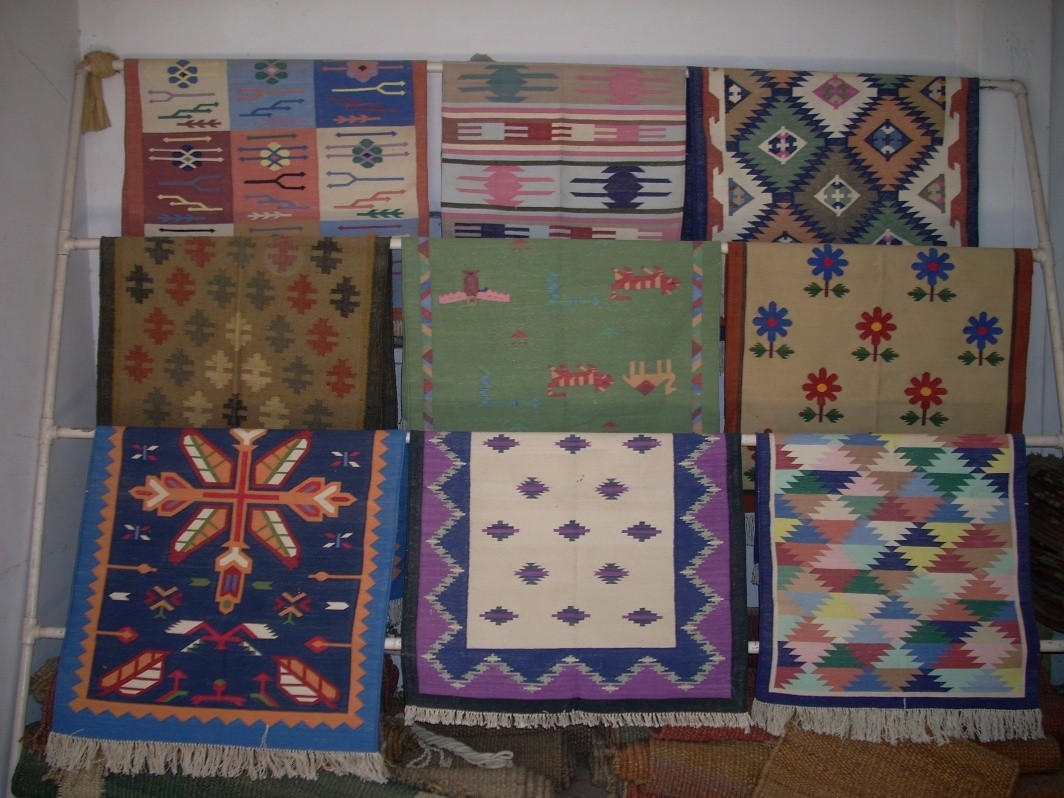
Navalgund durries are woven on traditional pit looms using sturdy cotton yarn. The base is tightly interlocked to create a flat, durable surface. What sets these durries apart are their bold motifs, stylised peacocks, elephants, chariots, and temple forms; inserted by hand into the weave. The colour palette traditionally includes deep reds, blacks, and indigo blues, derived from natural dyes. Each design is carefully counted and balanced, giving the durrie its symmetrical visual rhythm.
Cultural Significance and Recognition
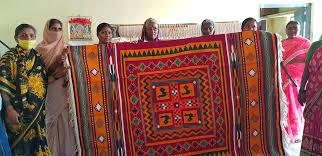
Historically, Navalgund durries were used as prayer mats and ceremonial floor coverings. They were part of wedding gifts and household heirlooms. Even today, they are valued for their lightweight structure and long-lasting quality.
The craft has received GI status in 2011, acknowledging its regional uniqueness. Cooperative societies and artisan groups continue to support women weavers, ensuring that this domestic yet deeply artistic tradition survives in modern markets. They remain woven expressions of Karnataka’s cultural fabric; beautiful, yet enduring.
Image References