
The Origins of Thirubuvanam Silk
The town of Thirubuvanam, located near the historic city of Thanjavur in Tamil Nadu, has been associated with weaving for several centuries. The region’s proximity to major temple centres and royal courts played a vital role in shaping its textile traditions.
While influenced by neighbouring silk traditions such as Kanchipuram, they developed their own structural techniques, motifs, and weaving style that balanced durability with visual richness. The sarees became known for their ability to retain lustre and strength even after decades of use, making them prized heirloom textiles.
The Art of Weaving
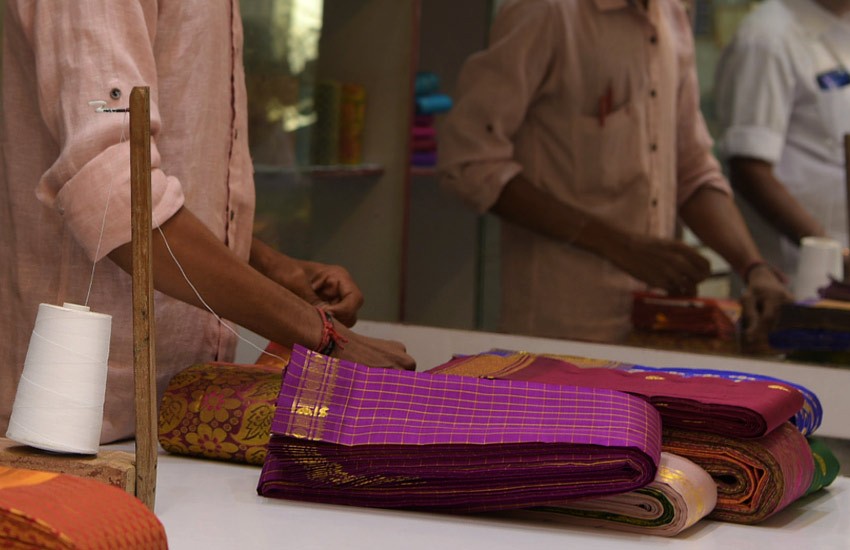
Thirubuvanam Silk Sarees are woven using high‑quality mulberry silk yarn, known for its smooth texture and resilience; on traditional handlooms.
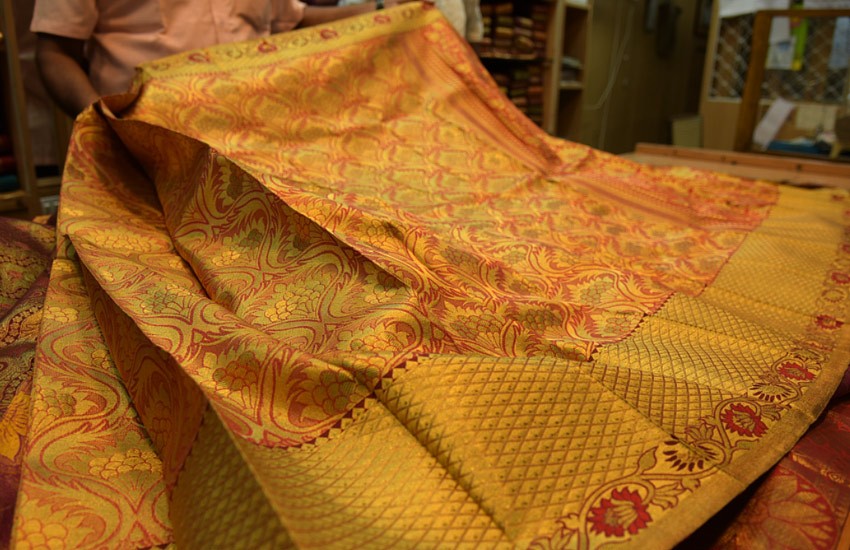
They are distinguished by their firm body texture and well‑defined borders, by careful interlock of warp and weft threads. The weaving often employs contrast borders and richly decorated pallus enhancing the saree’s visual balance. Unlike lighter silk varieties, Thirubuvanam sarees are slightly denser, giving them greater durability while maintaining graceful drape.
Designs typically draw inspiration from temple architecture, sacred symbols, and nature. Common motifs include Stylised temple towers (gopuram patterns), Floral vines and creepers, Geometric bands and checks &Traditional zari buttis scattered across the body. The use of zari (metallic thread) adds a subtle sheen and ceremonial elegance.
Cultural Significance
Thirubuvanam sarees hold an important place in Tamil ceremonial life. They are widely worn during weddings, religious festivals, temple visits, and other auspicious occasions. Traditionally, these sarees were part of bridal trousseaus and temple offerings, symbolising prosperity and cultural continuity. The saree thus becomes not just attire but a family heritage.
Recognition and Wider Appreciation
Thirubuvanam Silk Sarees received GI status in 2017, protecting authentic weavers from imitation products and strengthening the craft’s market identity.
Weaving families in and around Thirubuvanam continue to sustain this tradition, often working through government led cooperative societies that ensure fair pricing, and training for younger generations. While mechanised looms exist elsewhere, authentic Thirubuvanam sarees remain handwoven, preserving the craft’s structural qualities. Design innovation like lighter variants and contemporary colour combinations is helping the saree adapt to modern tastes while retaining its core identity.
Image References
https://gaatha.org/Craft-of-India/saree-weaving-thirubuvanam/