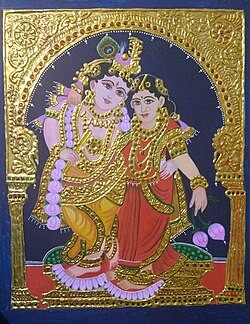
A Thanjavur painting of Radha and Krishna

A Thanjavur painting of Radha and Krishna
Thanjavur Paintings, also called Tanjore paintings are among India’s most iconic classical art forms. Originating in the cultural heartland of Tamil Nadu, these artworks are celebrated for their lush colours, embossed gold leaf work, gem inlays, and serene depictions of gods and goddesses.
The Origin
The art form traces its roots back to the late medieval period of South India, particularly flourishing between the 16th and 18th centuries. It evolved from South Indian mural traditions and the flourishing artistic culture nurtured by the Vijayanagara Empire’s Nayaka governors, who encouraged painting, music, dance, and literature in temple towns like Thanjavur.
When the Maratha rulers took over the Thanjavur throne in the late 17th century, their deep patronage propelled these paintings to new artistic heights. The Marathas introduced richer ornamentation, innovative techniques, and greater refinement, basically what we now recognise as the classic Thanjavur style; a unique blend of religious devotion, regal aesthetics, and cultural syncretism.
Unlike many other Indian painting traditions, Thanjavur art reflects a fusion of Tamil, Telugu, Deccani, Maratha and even subtle European influences.
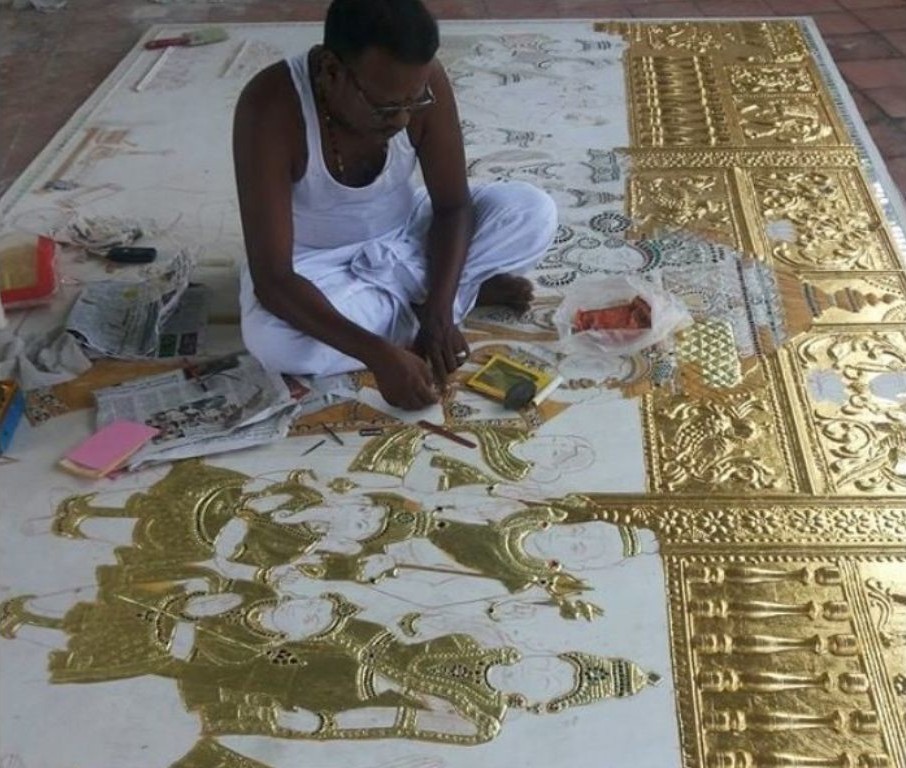
The Artistic Process
Artisans begin with a sturdy wooden plank (palagai padam), over which canvas is pasted using natural gums.
A paste of chalk powder and natural adhesive is applied to the drawing areas to build subtle relief. This technique, known as gesso, creates raised surfaces that will later catch the gleam of real gold foil.
The central figure; usually that of a god or goddess is outlined and painted using vibrant hues. Traditional palettes once drew from natural mineral and vegetable dyes. Today, artists mix modern pigments while maintaining classical aesthetics.
Gold foil is then carefully applied over the raised sections to achieve the signature luminous effect, and semi-precious stones, beads, or glass pieces are inlaid to enhance regality and texture.
Historically, the central focus of Thanjavur paintings was devotional depicting the sacred presence of Hindu gods and goddesses. Common subjects include Bal Krishna, Lord Shiva, Vishnu and his avatars, and various goddesses, all rendered in rich reds, blues, greens, and gold.
While religious themes remain predominant, historical and secular subjects like portraits of Maratha royalty, courtiers, and noble patrons were also introduced, when the Maratha courts commissioned ceremonial artworks.
Contemporary Relevance and Global Presence
Image References